






Last week the US Supreme Court reached a decision in a case that has implications for the Clean Water Act—or doesn’t, as it turns out. The case itself had really nothing to do with water quality, but instead turned on the definition of “navigable waters.”
A little background on the case, PPL Montana LLC v. Montana: The state of Montana had tried to charge rent to a power company that has hydroelectric dams on three Montana rivers. The Montana Supreme Court awarded the state nearly $41 million in rent for the riverbeds for a seven-year period, 2000 to 2007, and left open the possibility that the state could charge the company for periods of time after 2007 as well. Last week the US Supreme Court reversed the Montana court’s decision.
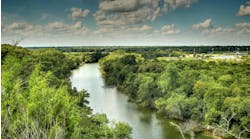
For the state’s claim to be valid, the rivers must be considered “navigable.” The power company contended that they are not, because some segments of the rivers are impassable and river traffic must get around them via overland portage. The Montana Supreme Court declared in its decision that “navigability for title purposes is very liberally construed”; it called the impassable segments “merely short interruptions” and said that each river as a whole should be considered navigable. However, one Montana judge, in a dissenting opinion, said that “courts are not to assume an entire river is navigable merely because certain reaches of the river are navigable,” and that was essentially the US Supreme Court’s opinion as well.
What does this have to do with the Clean Water Act? The CWA applies to “navigable waters,” and if the US Supreme Court had upheld the Montana court’s decision, it would have been a significant expansion of the definition of a navigable water.
Several industry associations expressed their approval of the outcome. ARTBA, the American Road and Transportation Builders Association, said the decision “removes a road block that could have needlessly delayed transportation improvements…. An expanded definition of ‘navigability’ could have resulted in a scenario where the EPA and Corps would have the option of exerting jurisdiction over roadside ditches, potentially adding years to already expansive review and approval process for transportation infrastructure projects.”
Variations on this theme have been litigated before, although more often it’s a different term that’s in dispute; the CWA applies to all waters with a “significant nexus” to navigable waters, and it’s been debated whether wetlands and intermittent streams, for example, should or should not be covered under the definition. Cases in 2001 (Solid Waste Agency of Northern Cook County v. United States Army Corps of Engineers) and 2006 (Rapanos v. United States Supreme Court) have narrowed the applicability of the CWA.
In the event, last week’s US Supreme Court ruling did not change the definition of a navigable water. Do you think there would have been significant expansion of the CWA’s application if the original Montana court ruling had stood? And do you think we’ll be seeing further debates and litigation on this topic in coming years?
************************
Upcoming Forester University Webinars
March 8th, 2012
Reducing Water, Energy, and Tax Bills for Facilities
Are you overpaying on your facility’s three largest variable costs: water, energy, and taxes? Join Fraser Allport, CEO, to explore how to reduce your facility’s utility and tax bills and future-proof for sustained performance by combing green technologies (green hardware and smart software) with government tax incentives in a cost-reduction action plan designed to obtain, quantifiable and sustainable resource and cost-savings results. Read more…
March 15th, 2012
BMP Management
for Surface Water Quality
Constantly influenced by natural eutrophication, direct human impact, and a changing climate, surface water is a scarce natural resource needing effective protection. Join Shahram (Shane) Missaghi to explore the function and benefits of BMPs in protecting surface water, and examine three key criteria to insure their successful implementation: water, soil, and climate Read more...
March 22nd, 2012
5 Proven Social Media Tactics to Engage Your Audience
Extend your outreach and campaign effectiveness with social media. Join Erica Hooper, Strategic Director at S. Groner Associates, to explore social media's (e.g., Facebook, Twitter, etc.) opportunities, myths, and real-world tested and proven social media tactics designed to engage your audience. Read more…