


July-August 2006

The Shape of Streams to Come

Practice and partnership in the Baltimore region

Article Tools

  • RSS
  • Save
  • Print
  • Email
Create a Link to this Article

Monday, January 01, 1753

By David C Richardson

Comments

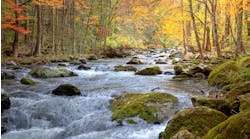
There is a classic image of the American stream that is easy for most of us to picture: the clear running brook, minnows darting over a sandy bed, gently sloping banks lined with willows and wi1d flowers. But the urban stream is quite different. The shape and character of streams in the urban environment have been dictated by the needs of human expediency.


Rob Ryan reflected on his early experiences with a stream near where he grew up in suburban Baltimore County, MD. It was an open concrete conduit. He remembers being impressed by the speed and power of the furious torrent over its continuous slope after heavy rains. “Common sense would tell you not to get too close,” he says, but even at age 12, he “was aware that it was not a natural system.” Now as Stream Restoration Program supervisor for Baltimore County Department of Environmental Protection & Resource Management (DEPRM), Ryan leads a tour of a recently completed stream restoration project at Wood Valley in suburban Baltimore County.

It is midwinter. A spring-like rainstorm the previous day has left the soil soggy, and rushing water can be heard in the distance. While climbing the gradual slope along the bank toward the headwaters, Ryan points out how the stream depth alternates at intervals from just a few inches deep over cobbled stones and sandy meanders to pools with no visible bottom. Near the headwaters of one of the restored tributaries, the sound of falling water intensifies. The source is a stormwater outfall, draining from a large institutional parking lot at the crest of a hill—the headwaters of the tributary. The sound is coming from inside the 30-inch drainpipe, and a steady, though not turbulent, flow emerges from the outlet.

Ryan explains, “This entire stream had been eroded to the point where a person standing in the streambed could not see the top of the bank. It was like a canyon.” Ryan climbs across the stream not more than 6 feet wide at that point. The banks slope gently on either side; there is no sign of erosion. He demonstrates the depth of the small pool at the mouth of the outfall by dipping a tree branch into the water—it is around 2 feet deep. A thin sheet of water gurgles out of the pool, through a maze of irregular blocks of stone and then over a row of rectangular boulders laid end to end across the stream. From there it flows smoothly for several yards only to cascade over another row of boulders, collecting again in a similar pool downstream. He stands and explains, “Falling water dissipates energy. Pools and steps like these control the velocity of the water after it leaves the drainpipe. Lowering it down the grade in steps helps prevent erosion. That’s the way it’s designed to function.”

There are other structures installed in the creek, such as root wads, the upended roots of trees extended into the creek to generate localized turbulence during peak flows (again to dissipate energy). Because they’re biodegradable, they could help revitalize the habitat for the future. If not for the straw mulching and the seedling grass spread across the site, this wooded setting would appear quite natural, even idyllic—but it is all manmade, completed just weeks before this tour was arranged.

Most urban streams have long ago been altered from their natural state. If they are not channelized in concrete conduit, they are severely degraded by pollution or erosion. Urban streams have been forced to turn at unnatural angles to conform to property boundaries, they serve as dumping grounds for all kinds of wastes, and they are filled in or covered over to make way for development. Ryan says, “What we’re trying to do here is restore the streams so that they can perform their natural ecological functions.” Baltimore County, with 37 stream restoration projects completed and several new projects in planning and design stages, is a national leader in applying these practices to restore urban streams.

What’s Wrong With Our Streams
The Baltimore region is one of Maryland’s most diverse. Situated on the edge of the eastern piedmont, it plays a critical role in the unique ecology of the Chesapeake Bay, the largest estuary in the United States and an irreplaceable resource.

In its early history, like many colonial settlements along the East Coast, it was developed along the fall line joining the piedmont to the coastal plain, exploiting the benefits of both a deep harbor and abundant fisheries. This was also the place that gravity—the powerhouse of the 18th century—could be harnessed in the form of falling water. It was here that the intersection of brackish tidal waters from the Chesapeake Bay and cascading inland waters mixed each spring to host spawning rituals of many species of fish. It was here too that these assets, combined with moderate climate and plentiful nearby resources, gave rise to the city of Baltimore, the first city in North America to reach a population of 100,000 and be among the top 10 largest cities in the United States into the 1980s.

However, 400 years of escalating urbanization have had an increasingly severe impact on the ecology of the region. While diverting and controlling the natural streams has played an important part in sustaining development, says Candace Croswell, manager of the Capital Program and Operations Section at DEPRM, “The thinking has changed. Streams are now beginning to be seen as valuable assets, not impediments to progress.” However, she adds, “The safety, health, and well-being of the community requires a certain level of stability, and the threat to that stability is posed by the natural response of water to the changes in the landscape.” It is the behavior of streams under changing conditions that has become a liability.

Turning the Tide
DEPRM was started in 1987 and “from the beginning was very active in waterway enhancements,” says Croswell. “Among the first projects we did were channel dredging in some of the marinas of the eastern part of the county. We wanted to get the boaters to stop using prop dredging to get in and out of their boat slips; it was contributing to excess sediment suspension and had negative impacts on the underwater ecology. So we dredged channels and encouraged the boaters to use them. That helped revitalize the remaining aquatic grass habitat in the area.

“Our stream restoration program strives to restore the natural balance, ecological function, and self-sustaining equilibrium to streams and waterways,” says Croswell. Because the timeline of a stream restoration project is long, a programmatic approach is necessary. “When we got into stream restoration in 1989,” she says, “we saw it as a long-term commitment.”

It Starts With a Plan
A typical project planning cycle for the county, says Croswell, “can average between 18 months and two years, and each stream is different.” There are considerations such as easements, buried utilities, roadways, bridges, and other infrastructure. Then there are the properties that may be affected, which might include structures imperiled by either the eroding stream or the construction process. “We have to consider everything from roadways to backyard sheds. There are no cookie-cutter solutions. Unlike a stormwater retrofit, a stream restoration cannot be delivered through a design-build process.” Further, says Croswell, “We want to look at all the options. If there’s some new technique that’s effective, we’ll consider it. Stream restoration is both a science and an art.”

For Baltimore County, stream restoration also requires teamwork from the very beginning. The Natural Resource Watershed Management and Monitoring Division begins the process, systematically evaluating the overall condition of the waterways throughout the jurisdiction and providing an assessment that can be used in planning intervention.

Photo: Baltimore County Department of Environmental Protection and Resource Management
Minebank Run, after restoration. Tributary behind Loch Raven High School at stormwater outfall with riprap, grasses, and native saplings.

The county has designated 10 of its 14 major watersheds to be in a sensitive condition with significant urbanization; these watersheds receive the special attention of the Watershed Management and Monitoring Division.

One of the functions this division performs prior to planning a stream restoration is to “cruise” the watershed’s stream reaches. Personnel do this the old-fashioned way—on foot. Steven Stewart, natural resource manager for DEPRM, says, “One of the most intensive assessments was done on the Patapsco Watershed. Staff along with consultants walked every stream mile for a total of close to 100 miles.”

Stewart, however, does not anticipate having to walk all of the watersheds in the county. “We don’t have the staff.” In fact, one impacted watershed, Loch Raven, contains about a third of the county’s 2,145 miles of streams. Staff members hope to use the data gathered from the reaches they do walk to develop some analytic modeling tools that consider conditions such as impervious cover and land-use patterns in the watershed. They hope to be able to extrapolate from these models to help identify potential problem areas in the real world.

While walking the streams, Stewart says, the consultants take “cross sectional measurements at various intervals to characterize the geomorphology, to tell if it is eroding or downcutting. They perform assessments of the vegetative stability and assess the condition and extent of the forest buffer. All this data is compiled, and the streams are ranked.” One of the tools used for this ranking is the geomorphological classification system developed by Dave Rosgen, published in 1994 in a paper entitled A Classification of Natural Rivers. It provides a framework for comparison through an alphanumeric system that takes into account dominant bed material, stream slope, riparian condition, sediment transport, and other factors. Stream reaches that are determined to be severely degraded are considered for restoration and prioritized.

“We don’t rely on this classification system alone,” says Ryan. “In this region we have to consider streams which have multiple flow regimes, we have to consider different soil types, and we have the impact of impervious cover. All these factors require us to use multiple analytic tools.”

Photo: Baltimore County Department of Environmental Protection and Resource Management
Minebank Run, after restoration. Additions include cobble, bioengineered bank stabilization, and cross vane.

The Capital Improvements Program also plays a major role in determining stream restoration priorities. One of the program’s responsibilities is to respond to stream erosion complaint calls. “A lot of our projects are initially driven by complaints,” says Croswell. Citizens can call to notify the department that “property is being eroded by a stream; infrastructure is threatened, exposed, or damaged, such as sewer line or water main breaks; or flooding has occurred. These calls go into a ‘stream complaint database.’ We go out and evaluate the situation, and if it’s appropriate, we explore the option of stream restoration.

“Anytime you use the word ‘restoration,’ people are going to get excited,” she says. But restoration is not only an end; it is also a means. “There are also impaired streams in rural areas of the county where you could target restoration, where you would not be constrained by space or infrastructure. But in cases where no assets are threatened, such as in forested or rural areas, it may be just as effective to allow the stream to find its own point of equilibrium, which it will do naturally if left alone for a long enough period of time. We approach projects with an eye toward what benefits can be achieved.”

Community at Center
When considering a restoration project, DEPRM gets the community involved from the earliest stages. Not only is it necessary to get the residents’ and community’s cooperation for easements and access during the construction phase, but also residents’ long-term involvement can be essential to maintain proper vegetative buffers and to report problems later if they should arise.

“We contact every resident with property adjacent to the potential project,” says Ryan. DEPRM holds formal meetings with the community at various stages in the planning process. The community doesn’t draw up the plan, but members are invited to share their concerns, information, and observations.

And citizens often do raise concerns during the process, notes Croswell. “One of the projects backed right up to the residents’ yards. It was a concrete conduit, and it was failing. We presented the residents with the option of replacing the concrete or going forward with a naturalistic stream restoration. We asked for their input. One concern they had was how much disruption there would be during construction. Others didn’t like the idea of wild plantings along the bank because they liked to keep their lawns neatly mowed right up to the edge of the culvert, but when we described how it would appear when it was complete, and they got to see photos of other completed projects, they all finally went along.”

Sometimes, not everyone can be persuaded through the formal channels. In one case, a resident refused to allow access for construction. “He wanted to be able to mow right up to the edge of the stream,” says Croswell. “We were willing to compromise on that, but he still denied access. It took extensive negotiations; we offered him holly bushes rather than the usual native wild plantings for the buffer along his property. Still he was adamant. In the end, I told him if he continued to deny access, I would make sure that the county-owned easement along his property line would be planted entirely with wild vegetation and he wouldn’t be able to mow it at all. That finally convinced him.” But, she says, “He still mows right up to the edge of the bank.”

In another case, a neighbor of the stream was so determined to stop a project from encroaching on his yard that he threatened to lie across the stream to prevent work from starting. Croswell says, though, that by explaining the process and the benefits of the project, she was able to put him more at ease. “Now,” she says, “he’s one of our biggest fans. He says he’s happy the creek doesn’t flood anymore. He even wrote a letter to the county council praising the DEPRM. You really get to know a community,” she adds. “I encounter people all over the county who I’ve worked with in one way or another during a restoration project.”

Analyzing Failures
“We design our stream stabilization and bank protection structures to withstand the 100-year or bigger storm,” says Ryan. But the structures are built to perform stream channel stabilization based on the one- or two-year storm.

Stability is the goal, but restorations are not zero maintenance. According to Croswell, periodic evaluation has to be part of the program. She says, “Stream restorations need to be treated as you would any other major piece of infrastructure investment.”

Ryan concurs. “We have standing contracts with firms to go in and do repairs when necessary. On occasion we’ve had to. But first we evaluate the situation to see what went wrong so we can take the appropriate action. It can be as simple as replanting grasses that fail to take root because of drought, or it could be we need to go in and modify a structural practice.”

Some failures are precipitated by physical changes in the hydrological regime that are unpredictable. One example was a restoration project completed 10 years ago along a creek called Stemmer’s Run where a number of practices had failed, leaving boulders stranded midcreek, root wad footings exposed, and root wads deflected. Because DEPRM performs continuous monitoring of its projects, it was able to assess the cause of the failure, which was found to be emergency measures taken to shore up a bridge crossing sometime after the restoration project’s completion. As a stopgap measure, the county had installed grout bags to reinforce the abutments. These, in turn, says Croswell, “pinched the stream, causing it to back up, affecting practices upstream. Water forced through the narrowed gap at the bridge damaged some of the practices downstream. The DEPRM has decided to wait until the bridge repair can be coordinated with the work on the stream before going back to repair the restoration.”

Photo: Baltimore County Department of Environmental Protection and Resource Management
Minebank Run, very incised, before restoration. Note the collapsed bank and the downcutting erosion with barn in background.

A Learning Process
According to Ryan, the State of Maryland has one of the most rigorous regulatory environments in the nation. He notes, “A 1,000-foot restoration that would require just eight pages of design sheets to meet regulations in North Carolina would require 40 pages of documentation in Maryland. Our most recent job required eight pages on sediment control alone.” But these strict requirements also impose a strict discipline and increase the possibility of repeatable results. Ryan adds, “Other jurisdictions like to buy our plans because they are so well documented. Although,” he says, “its not a significant source of revenues.”

But it is not just documentation that adds to the knowledge base. “What sets Baltimore County’s stream restoration program apart from many others,” Croswell says, “is the depth of the commitment DEPRM has to each project. We take ownership of the entire process from initial assessment to post-construction monitoring and evaluation.” She and her staff walk miles of stream reaches to evaluate the individual practices for both structural integrity and effectiveness. “We’re still monitoring our very first projects even after they’ve been in the ground for 10 years. That way we see for ourselves what works and what doesn’t in our environment.”

Croswell says much of the learning is experiential and is shared at gatherings of stream restoration professionals—groups that a few years ago had just a handful of participants and now attract hundreds. She’s seen the audience widen over the years she has attended to include not just managers and engineers but grassroots organizers and academics as well.

On-the-job training is critically important, too. She cites an incident that she had heard about from colleagues. A track excavator operator and his crew working on a stream in a neighboring jurisdiction took a break for lunch, leaving their excavator parked on the floodplain. They noticed a few clouds had gathered, but it was still sunny. A few moments later, a violent squall struck. In the deluge, the stream topped its bank and a wall of water inundated the floodplain and submerged the excavator before the crew had a chance to effect a rescue. Croswell says she’s seen photos from the site: “All you can see is the top of the excavator.” The lesson? “Get your gear out of the floodplain any time you are going to leave it unattended—very expensive.” This also helps explain why she insists that the contractors the county hires have “previous stream experience.”

The US Department of Agriculture has published an informative manual, revised in 2001 and available online, entitled Stream Corridor Restoration: Principles, Processes, and Practices. Weighing in at 637 pages, it clearly explains key concepts with illustrations and examples. An organization called Wildland Hydrology offers instruction and seminars on natural channel design, the concept developed by Dave Rosgen. There are emerging academic programs in the science of fluvial geomorphology at several universities and colleges. Croswell emphasizes the importance of having trained hydrologists and fluvial geomorphologists on staff. “It is an evolving science,” she says, “It’s important to stay up to date with the newest developments. But,” she continues, “there’s also an art to it that can only be attained through practice.”

Breeding Success
Much of the work the county has done has been greeted locally with enthusiasm: turning eyesores and safety hazards into civic space. But there appear to be other less visible, though no less tangible, side benefits. One such benefit, which is now undergoing careful study, is the nutrient control potential of restored streams. Steven Stewart says DEPRM has begun a grant-funded study to find a means to quantify the nutrient-removal potential of stream restoration. “We’re studying nitrate removal using N15 as a surrogate. If this can be done, it may be possible to develop a protocol to include stream restoration as a mitigation in response to total maximum daily load requirements.” Looking ahead, Stewart says he can foresee the same being done for other pollutants.

The success of Baltimore County’s restoration efforts did not escape the notice of officials in the neighboring jurisdiction of the City of Baltimore. Although as of 2003 the city had not initiated a stream restoration project, a rationale was building for such a project. According to Bill Stack, they city’s Pollution Control Program administrator in the Bureau of Water and Wastewater, the city was looking for a cost-effective means of addressing its National Pollutant Discharge Elimination System (NPDES) permit requirements, which call for treatment of an additional 10% of impervious cover each year. In the highly developed urban districts, he says, “The city was running out of options for impervious treatment. There are few areas left in the city that have the space where you can build ponds to control runoff. The most cost-effective measure that we have right now to treat impervious surface is to try to stabilize streambanks.”

Partnerships
“The watershed associations are our eyes and ears,” says Ryan. “They sponsor stream cleanups and stream walks and keep the community focused on water-quality issues.”

One association in particular, the Herring Run Watershed Association (HRWA), was a galvanizing force behind Baltimore’s first major stream restoration project. The HRWA set the ambitious goals of reviving long-gone herring fisheries in the watershed. Established in 1993, the HRWA plays an important role in community outreach and advocacy by promoting programs such as tree-planting campaigns in the inner city and providing environmental education opportunities. It has also developed a relationship with the city as steward of the Herring Run Watershed and performs water-quality monitoring under a contract with the Department of Public Works (DPW).

“A dialogue between the HRWA and city developed,” says Stack, “and when an opportunity arose to do some grant-funded highway system work, we decided to include a stream restoration component.” The HRWA proposed that the project be done at Biddison Run, a creek located near a closed landfill and experiencing major erosion issues along with mitigation concerns.

Biddison Run: A Case Study
On a mid-February day with the ground damp from wet snow that has been falling all morning, Darin Crew, watershed restoration manager for the HRWA, climbs down to the bank to gather water samples from Biddison Run. “The city wants to know before, during, and after how the restoration would affect water quality,” he explains.

Crew says he’s also interested in seeing fish return to the channel. “There’s a 2-foot-high gabion at the mouth of the stream where Biddison Run meets Herring Run that’s blocking them out. Part of the project is to remove that barrier.”

Crew and Matt Adams, a biologist with Meadville Land Service Inc., the contracting firm performing the restoration at Biddison Run, take a moment to reminisce. They exchange stories of fishing the creeks of the hill country of Scranton, PA, and they lament what they see as the degradation in the quality of those streams.

Photo: Baltimore County Department of Environmental Protection and Resource Management
Goodwin Run, before restoration. Stormwater outfall feeds trapezoidal concrete channel.

Adams points out some features of the Biddison Run project. The project, he says, encompasses 1,500 feet of stream. Each day, the work crew builds a dam upstream of the work area and the flow is diverted and pumped through a 6-inch hose for 300 feet to bypass the construction. The water is released just downstream of the construction site, where it is filtered through a fine mesh sediment bag and allowed to flow back into the creek. This keeps silt that is stirred up by the work out of the stream and creates a relatively dry place to stand, says Adams. Though working in the stream is disruptive to fish and other aquatic life, they return to their habitat quickly once the source of the disturbance is removed. That happens at the end of each workday when, Adams explains, “we turn off the pump and remove the dam, and the fish, if there are any, can return.”

The early days of the project, Adams says, were somewhat unusual, and were spent excavating shovel loads of wrecked washing machines, old tires, and wheel rims, along with boards and tree stumps, from the streambed. “I don’t think most restoration projects are digging up washing machines with the excavator,” he says, pointing out two rubble heaps each over a story high on the edge of the work site. “All of that came from the streambed.”

Because of the steepness of the slopes of the landfill, certain principles of natural channel design had to be modified in the interest of expediency. Because of lack of space at the site, it was not possible to provide the optimal grading of the banks. Instead the banks were armored with boulders to prevent erosion and to keep the landfill from collapsing into the stream.

Biddison Run itself is so steep that one of the primary goals had to be control of the velocity of the water and protection of the banks. This necessitated the use of a number of grade control structures such as step pools and cross vanes. In fact, it became apparent during installation that the original plans called for steps too steep to allow fish passage, so, Adams says, “An additional step was added that was not in the original plan.”

The creek bed is excavated for the installation of a cross vane grade control structure. Three-foot by 2-foot by 4-foot boulders are set in the cavity in a V-shaped formation to serve as footers. Before the header stones are placed on top, the excavator operator hammers the footers with the basket, with such force that the earth shakes on the streambank several yards away.

The assistant who climbs into the streambed with a surveyor’s rod indicates to the operator which boulder to select next for placement. In some cases when the boulders do not have the desired fit, they are set aside while a different rock is selected from the pile. No mortar or fasteners are used. “It makes a difference,” says Adams, “when you have an experienced team working together. They can just about tell which boulders are going to give you the right structure and stability.”

Not every task requires heavy machinery. At the upstream end of the project, the box culverts were clogged to a depth of about a foot with gravel, silt, and mud. “We decided to just let the flow gradually clear that out. Now you can see the sediment moving out and being deposited down along the stream.”

The permit requires that in-stream work be suspended during spawning season, which runs from March 1 until June 15 each year. With that deadline approaching, Adams is anxious to see as much in-stream work completed as possible.

He looks forward to returning to the stream to complete the restoration over the summer. “It’s really satisfying when a project is done and the plantings have taken root, when the banks are green again.” Adams says he realizes that the construction crew and the members of the project team will probably be among the few people who ever experience the improved stream. “Since it’s next to a landfill, it will probably never be a destination. I can’t imagine too many people wanting to come back here. But, at the end of the project, when we remove the gabion and regrade the mouth of the channel, the fish will be able to return.”

“Biddison Run is a unique project,” Stack says. “It was so isolated, being out near the landfill, there weren’t really many issues with the community. The main organization that did come forward, Herring Run Watershed Association, supported the project.”

However, with the Biddison Run Project nearing completion, the city is preparing to begin construction in other watersheds. They are facing the same realities as the county in dealing with the communities. Residents near Stony Run in west Baltimore City objected to street closures during construction, “forcing the DPW, at considerable expense,” to build an access route to the project site through a nearby park, says Stack.

Working Together
Both Baltimore County and the City of Baltimore are concerned with water-quality issues, and they have sought to develop a project that would address this mutual concern across jurisdictions. They entered into a cooperative watershed restoration agreement on October 3, 2002.

The agreement pledges both the city and the county to adopt common environmental goals and to work cooperatively to meet those goals. It also pledges both jurisdictions to work with local environmental groups.

The Powder Mill sub-watershed, which encompasses areas of both county and city, was selected by consensus as the area to initiate this process. Over 100 potential practice opportunities have been identified using the open channel database study. “One recommendation to achieve coordination between the municipalities is to have the entire Powder Mill Watershed plan developed by a single consultant,” Stack says. The city intends to begin implementation as funds become available.

Future Challenges
It can be a challenge translating successes in stream restoration across regions. The language and the standards are still evolving. Comparing projects in different watersheds can be like comparing apples to alley cats. But regional cooperative efforts hold much promise for addressing issues that would be impossible for any jurisdiction to deal with alone.

But there are unknowns. “A single storm event can cause stream meanders to migrate drastically,” Croswell says, as happened on Minebank Run in 1972 when Hurricane Agnes shifted the stream course by 15 feet. “If this happened during the planning phase of a project, it could require a reconfiguration of the entire plan.”

And there are controversies. Stack says, “There is debate over how to apply sediment transport and deposition models to sediment-starved urban streams. And agreement is not universal over whether the channel-forming storms that should be used for modeling are the one- to two-year storms or the more frequent smaller storms.”

And then there are results.

Standing on a restored streambank, Ryan says he’s been surprised by how many species of fish have returned to the pools of restored stream reaches. Peering into a deep pool at Minebank Run, one of the streams he visited as a child and one of the county’s newest and largest restoration projects, he says he “has seen fish there.”

“Trout,” he says, raising his palms from his sides to demonstrate. “Nice ones. About—like that.”

Author's Bio:

Writer David C. Richardson is a frequent contributor to Forester publications.


Advertisement]

What Do You Think?


Be the first to tell us what you think!

Post a Comment

Note from the Editor: The content that appears in our "Comments" section is supplied to us by outside, third-party readers, and organizations and does not necessarily reflect the view of our staff or Forester Media—in fact, we may not agree with it—and we do not endorse, warrant, or otherwise take responsibility for any content supplied by third parties that appear on our website. All comments are subject to approval.

CAPTCHA Validation
CAPTCHA
Code:


Stormwater Email Updates!

Get weekly news and updates through our email newsletter!